
Forex Trading Fundamentals - Best Books for Market Logic
*Disclaimer: This page contains affiliate links. If you choose to purchase after clicking a link, we may receive a commission at no extra cost to you.
To succeed in the global currency markets, understanding charts is not enough. You must understand why prices move. Before diving into advanced strategies, every trader should grasp the fundamentals: interest rates, economic health, and geopolitical flows.
The books below are the industry standard for "forex trading basics" and fundamental analysis. They cover how the currency market operates across major financial centers (New York, London, Tokyo) and explain the terminology and mechanics of institutional trading. These reads are perfect for beginners seeking a solid foundation and for experienced traders looking to reinforce their understanding of macroeconomics.
Turn macro themes and session behavior into a simple routine with these tools:
- Forex Heatmap: spot currency strength/weakness at a glance.
- Market Hours: plan trades around the active sessions.
- Seasonality: explore recurring tendencies by month/period.
- Correlation Tool: see how pairs move together (or diverge).
Currency Trading for Dummies - by Paul Mladjenovic, Kathleen Brooks, and Brian Dolan
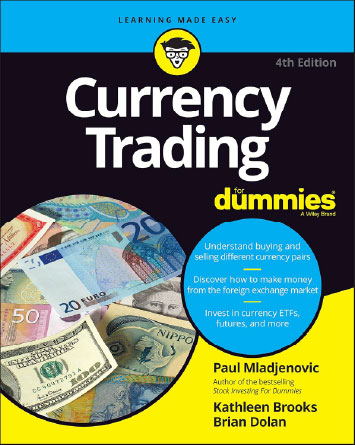
Summary: A clear, easy-to-read introduction that covers everything a beginner needs to know about the forex market - from understanding currency pairs and how the market operates to the tools and terminology of trading. It walks readers through the basics of executing trades and demystifies common jargon, serving as a solid foundational overview of forex trading. Now in its 4th edition, this book has stood the test of time as a go-to starter guide, often cited for its reliability.
Why It's Recommended: It breaks down complex topics into simple terms, making forex accessible for newcomers. The no-nonsense explanations and step-by-step instructions provide a quick learning curve without assuming any prior knowledge. Even seasoned traders can use it as a handy refresher on fundamentals.
Best Suited For: Beginners who are brand new to forex. (Even more experienced traders will appreciate it as a refresher on core concepts.)
Key Takeaways:
- Forex basics: Understand what forex is, how currency pairs work, and how the forex market operates on a global scale.
- Trading mechanics: Learn how to place trades, including the role of brokers, how to read quotes, and the meaning of pips and leverage.
- Risk management & mindset: Grasp essential risk-management principles and see what makes successful traders (e.g. the importance of discipline and strategy).
Day Trading and Swing Trading the Currency Market - by Kathy Lien
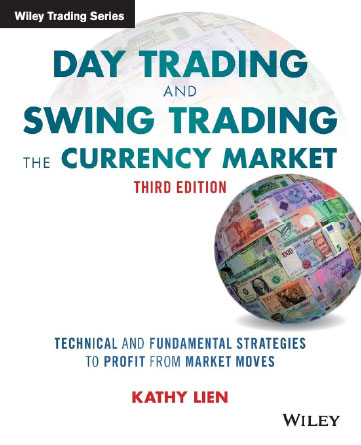
Summary: A comprehensive guide that blends forex trading theory with actionable strategies. Written by a renowned currency analyst, this book (now in its 3rd edition) provides a two-pronged approach: it explains the fundamental drivers of currency movements and pairs that with technical trading strategies used by professionals. Lien walks readers step-by-step through forex fundamentals (like long- and short-term economic factors affecting currency pairs) and then shows the technical analysis methods that professional forex traders use every day to profit. By covering both day trading and swing trading techniques, the book helps traders generate consistent profits in different time frames.
Why It's Recommended: Kathy Lien is a highly respected industry expert, and she manages to bridge the gap between institutional knowledge and retail trading. The book's balanced insight into both fundamental and technical strategies gives individual traders a well-rounded toolkit on par with what institutional traders employ. It's also up-to-date and practical - filled with real-world examples and market insights from Lien's Wall Street experience.
Best Suited For: Beginner to Intermediate traders - newcomers will gain exposure to key concepts (with plenty of explanation), while intermediate traders benefit from the depth of strategy and the blending of fundamental analysis with technical tactics.
Key Takeaways:
- Big-picture drivers: Understand the economic news, indicators, and long/short-term factors (interest rates, GDP, etc.) that move currency prices.
- Technical strategies: Learn specific trading setups and technical analysis techniques (chart patterns, momentum strategies, etc.) that can be applied to forex - the same strategies used by pros in daily trading.
- Actionable approach: See how to combine fundamental views with technical entry/exit timing for both short-term day trades and multi-day swing trades, all illustrated with examples from real currency market scenarios.
The Art of Currency Trading - by Brent Donnelly
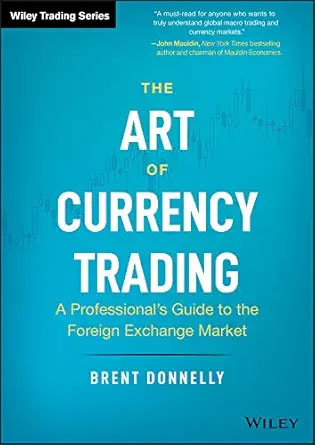
Summary: A look inside the world of professional forex trading, written by a veteran bank currency trader. This book provides "the inside scoop on how a bank trader places trades and manages risk," with a focus on practical fundamental analysis. Donnelly shares how he dissects news and economic conditions to anticipate currency moves (rather than relying purely on charts). Alongside macro-based trading strategies, he offers guidance on risk management and position sizing from a pro's perspective. The tone is conversational and accessible, so readers effectively get to "look over the shoulder" of a seasoned forex trader making decisions in real time.
Why It's Recommended: It's rare to find a forex book that shows how professionals think - this one does exactly that, giving readers a window into the decision-making process of a successful bank trader. The emphasis on fundamentals (often under-prioritized by retail traders) and on risk management techniques provides strong value. By reading this, you'll gain insight into how to trade forex with an institutional mindset - a valuable edge for serious traders.
Best Suited For: Intermediate to Advanced traders. Those who have basic forex knowledge and now want to elevate their game by incorporating fundamental analysis and pro-level risk management will benefit most. (Beginners can also learn, but some groundwork in forex basics will help in absorbing the more advanced insights.)
Key Takeaways:
- Institutional strategies: How professional traders use fundamental analysis - like interpreting economic data releases, central bank policies, and news - to forecast currency movements.
- Risk and trade management: Techniques for managing positions like a pro - e.g. how to size positions appropriately and manage trades around key market events, controlling risk on each trade.
- Professional mindset: Insight into the thought process of a bank trader - understanding how to plan trades, remain disciplined, and adapt to changing market conditions, all conveyed through real anecdotes and examples.
Currency Trading and Intermarket Analysis - by Ashraf Laïdi

Summary: An advanced exploration of how global markets interconnect with forex. Ashraf Laïdi reveals the "intricate web" of relationships between currencies and other asset classes (like stocks, bonds, and commodities). Instead of looking at currencies in isolation, this book shows how events in one market (say, a surge in oil prices or a bond yield change) can ripple into exchange rates in predictable ways. Laïdi draws on extensive experience as a strategist to translate complex macroeconomic and intermarket principles into practical trading insights. (For example, he details how divergences in central bank policies or other cross-market shifts can signal upcoming trends in currency prices.)
Why It's Recommended: This book is an essential compass for understanding the "why" behind currency moves. It empowers traders to see the bigger picture and anticipate forex trends before they fully develop by linking economic events across markets. Many traders will recognize the scenarios Laïdi describes, but this guide connects the dots in a way that makes those insights actionable. It arms you with a top-down view of market forces - a valuable perspective for serious forex traders looking to anticipate major moves rather than just react to them.
Best Suited For: Advanced and analytically minded traders. It's ideal for those who have basic forex experience and are ready to expand their analytical toolkit beyond charts. (Not recommended as a first read for complete beginners due to its complexity.)
Key Takeaways:
- Intermarket relationships: A deep understanding of how other financial markets (equities, commodities, bonds) influence currency values. For example, knowing when rising oil prices might boost oil-exporting nations' currencies, or how stock market trends can signal risk-on/risk-off shifts affecting forex.
- Anticipating trends: How to use macroeconomic clues (like differing central bank interest rate policies or yield curve changes) to anticipate major currency moves months in advance, rather than just reacting to them.
- Big-picture analysis: The book teaches why currency markets move, not just how - giving you the ability to develop broad forecasting models and understand the context behind price movements. This advanced skill helps you see opportunities and risks that others might miss.