
Risk & Money Management - Best Books for Survival
*Disclaimer: This page contains affiliate links. If you choose to purchase after clicking a link, we may receive a commission at no extra cost to you.
In forex trading, "protecting your capital" is the only job that matters. You cannot trade tomorrow if you lose your chips today. The following books teach you how to manage risk and money effectively, focusing on position sizing, expectancy, and probability.
Most beginners focus on entries; professionals focus on exits and size. If you want to trade for the long run, mastering risk management is non-negotiable. These reads will help you trade smarter, not just harder, by emphasizing capital preservation and strategic planning over gambling.
Put risk, sizing, and exposure control into practice with these free tools:
- Position Size Calculator: size a trade based on account risk.
- Compounding Calculator: model realistic growth and drawdowns.
- Correlation Tool: avoid stacking similar exposure across pairs.
- Volatility Tool: sanity-check stop/target distances vs typical movement.
Trade Your Way to Financial Freedom - by Van K. Tharp
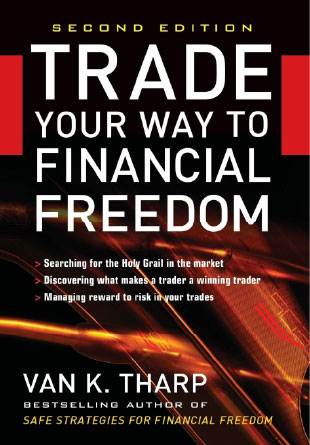
Summary: A renowned guide to developing a personalized trading system and mastering risk management. Van Tharp emphasizes that there isn't a single "holy grail" strategy - instead, you must design a system that fits you. The book provides a realistic view of trading, pointing out common traps that most people fall into and explaining why they happen. Tharp focuses on key principles like position sizing, expectancy, and self-awareness. He breaks trading success into components and stresses that how you exit trades (and manage risk) is often more important than how you enter. Chapters function like a workbook with exercises, guiding you through steps such as defining your objectives, determining your risk tolerance, and crafting rules for entries and exits. By the end, readers learn how to create and test a trading system that is unique to their goals and personality.
Why It's Recommended: This book is highly regarded for shifting traders' focus from just "finding winning trades" to managing risk and designing a complete system. Tharp's insights on positive expectancy (ensuring your strategy makes money over time) and position sizing are considered must-know fundamentals of trading risk management. He also lays out psychological groundwork - encouraging open-mindedness and understanding your own behavior - which ties directly into making a system you can actually follow. For anyone who has been trading haphazardly or blowing up accounts, this book provides structure and a path to professionalism. It's not a get-rich-quick recipe; rather, it's about building a sustainable trading approach from the ground up.
Best Suited For: All experience levels, but especially intermediate traders who have tried some trading and realized they need a better plan. Beginners will gain a strong foundation in doing things right (before bad habits form), and advanced traders will appreciate the thorough approach to system design and risk control.
Key Takeaways:
- Customize your system: Learn a step-by-step process to develop a trading system that suits your style and objectives. This means studying other people's systems and then picking the elements that work for you, rather than blindly adopting someone else's rules. The result is a strategy you understand inside-out and have confidence in.
- Risk and exits first: Tharp teaches that exit strategies and risk control are more important than entry. You'll focus on setting proper stop-losses, determining position sizes, and knowing when to take profits in a way that ensures no single trade can ruin you. (One key concept is the use of *R-multiples* - understanding the risk on each trade - and ensuring your winners, on average, outweigh your losers to achieve positive expectancy.)
- Know thyself and stay open-minded: The book drives home that a trading system must fit your personality - for example, if you hate high volatility, don't force yourself to trade volatile markets. Tharp also warns against being too narrow-minded or fixated on one method; adaptability and continual learning are crucial. By tracking your performance and psychology (e.g. keeping a trading journal and analyzing your "batting average" of wins vs. losses), you cultivate self-awareness. This helps prevent common pitfalls and ensures you continuously improve your system over time. In essence, trading is a personal journey and risk management is the bedrock - this book helps you map out that journey for long-term success.
High Probability Trading - by Marcel Link
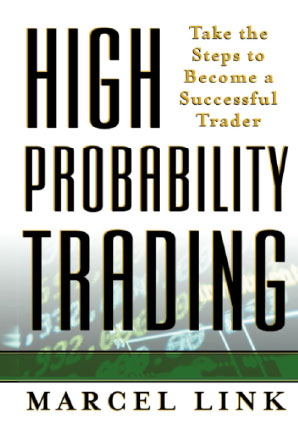
Summary: A down-to-earth, practical blueprint for building a consistently profitable trading approach, drawn from the author's own trial and error. Marcel Link recounts how early failures taught him what doesn't work, and from that he formulates what does. The book covers every aspect of a trade from start to finish: preparing for the trading day, identifying high-probability trade setups, executing entries, setting stops, managing the trade, and performing post-trade analysis. Link is brutally honest about the effort needed - this is not about quick wins, but about methodical preparation and discipline. He stresses developing a personalized trading plan and demolishes the myth that any single system works for everyone. There is also heavy focus on risk management and psychology - for example, handling drawdowns and avoiding emotional decision-making. Overall, *High Probability Trading* reads like a mentor guiding you through the process of maturing as a trader, with checklists and concrete rules to follow.
Why It's Recommended: This book is often praised for being extremely actionable and realistic. Link doesn't promise millions; instead, he provides a candid look at the challenges and how to overcome them. For traders who have been struggling, it's a wake-up call that consistent profits come from a solid plan, patience, and constant self-review - not from chasing holy grails. It stands out because it's like getting a complete trading education (strategy, risk, psychology) in one place. Link's emphasis on personalizing your trading system and learning from your mistakes aligns with what actually happens on the path to success. He also gives tangible techniques - for example, how to create a checklist for a good trade, how to set stop losses properly, how to analyze your trading journal - which traders can implement immediately.
Best Suited For: Intermediate traders who have some experience but aren't yet consistently profitable. If you've been trading for a while and feel like you're missing something (perhaps you win occasionally but give it all back, or you struggle with discipline), this book is directly aimed at you. Advanced traders can also benefit as a refresher on tightening up their trading process. Beginners could read it too - it would set the right tone from the start - though some parts might feel detailed for a novice; they can always revisit sections as they gain experience.
Key Takeaways:
- End-to-end process: You get guidance on the entire trading process, from pre-market preparation and trade entry checklists to post-trade analysis and journaling. It emphasizes that consistency comes from following a thorough routine every day.
- Discipline over hype: Consistent profitability is achieved through a solid plan and discipline, not by finding a magical indicator or system. The book reinforces that no holy grail exists - success is about doing many things right (risk management, strategy, mindset) day in and day out.
- Personalize and adapt: Traders must develop a plan that fits their own style. Link encourages learning from both wins and losses via journaling and self-review. By analyzing your trades and emotions, you can identify what works for you and what doesn't, allowing continuous improvement of your strategy and habits.
Come Into My Trading Room - by Dr. Alexander Elder
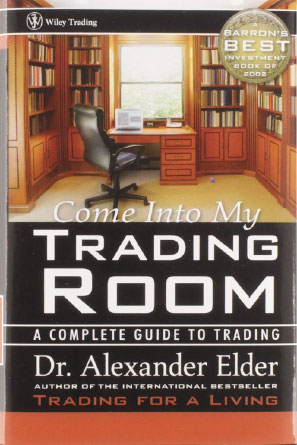
Summary: A holistic trading guide that covers the three critical M's: Mind, Method, and Money. In this follow-up to his classic *Trading for a Living*, Dr. Alexander Elder shifts focus "from technical analysis to the overall management of a trader's money, time, and strategy." This book truly takes you into the trading room by starting with fundamental concepts and then revealing the "secrets" of successful trading routines. It educates novice traders on the essentials of trading - from reading charts to placing trades - while also fortifying experienced traders with advanced techniques in risk management and discipline. Notably, Elder provides a step-by-step money management strategy that any trader can implement, plus an in-depth look at how to organize your trading day for optimal results. He introduces some lesser-known technical tools as part of one's method, but always ties it back to managing risk and self-control. The writing is engaging and packed with anecdotes, making complex topics digestible.
Why It's Recommended: Elder is revered for his ability to integrate psychology, strategy, and risk control, and this book is a masterclass in that integration. It's recommended because it doesn't focus on just one aspect - it drives home that successful trading is an interplay of having the right mindset, a sound method, and strict money management. Readers come away with both big-picture understanding and concrete tactics. For instance, the money management rules here (like the 2% risk rule and risk-of-ruin concepts) are lifesavers for many traders, and the emphasis on journaling and self-discipline provides a blueprint for longevity in the markets. The book's comprehensive nature means it can replace a small library - it's like getting a mentor's full wisdom in one volume.
Best Suited For: Beginner and Intermediate traders. Beginners get a thorough introduction to all facets of trading (this is often one of the first books recommended to new traders because it's so well-rounded). Intermediate traders who have a strategy but lack consistency or risk control will find immense value in Elder's money management and psychology sections. Even advanced traders can benefit from the reminders and may pick up a few new tricks or perspectives on organizing their trading as a business. In short, if you feel you have gaps in either your trading plan or your self-discipline, this book is for you.
Key Takeaways:
- Mind-Method-Money synergy: True trading success comes from balancing all three M's. You must approach trading with a professional mindset, a tested method (a strategy with an edge), and strict money management. Elder emphasizes that neglecting any one of these elements can undermine your performance.
- Life-saving risk rules: The book drills in essential money management rules (like never risking more than 2% on any trade, understanding your risk-of-ruin, etc.). These practical rules protect your account from catastrophic losses and instill discipline in how you size positions and set stops.
- Self-monitoring for longevity: Elder shows that keeping a trading journal and treating trading as a business are key to long-term success. By recording trades and emotions, you identify patterns in your behavior and performance. This commitment to self-review and continuous improvement helps traders maintain objectivity and discipline over years of trading.
Beat the Forex Dealer - by Agustin Silvani
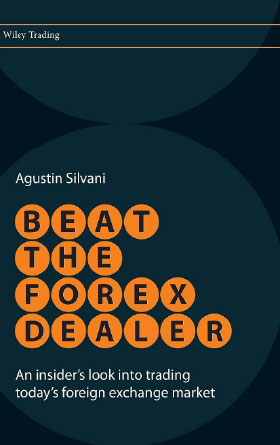
Summary: An insider's guide to understanding and overcoming the hidden odds in retail forex trading. Agustin Silvani exposes how forex market makers (the "dealers") often play against retail traders - through practices like stop hunting, spread widening, and exploiting predictable retail behaviors. Drawing on his institutional experience, Silvani pulls back the curtain on these operations, revealing how and why your broker might "gun" your stops or why obvious chart levels sometimes inexplicably fail. Importantly, after unveiling the problems, the book provides counter-strategies for the retail trader. This includes tips on how to hide your intentions (so you're not an easy target), how to identify likely stop-run zones on the chart, when to avoid trading (e.g., during illiquid moments when dealers have more leeway), and how to structure your orders to reduce the chance of slippage or manipulation. Silvani also educates readers on market microstructure - essentially, how pricing and order flow really work behind the scenes - giving traders a deeper understanding of what moves prices beyond just technical patterns.
Why It's Recommended: This book is a must-read for serious forex traders because it addresses a reality many other books ignore: the broker isn't always your friend. Retail traders often lose not just due to bad strategy, but because they're playing a game whose rules they don't fully grasp. *Beat the Forex Dealer* arms you with that knowledge - it's like getting a peek at the casino's playbook. By learning the dealers' tricks, you can avoid common pitfalls that drain many forex accounts. Additionally, the strategic advice turns these insights to your advantage, essentially teaching you how to "trade defensively" and outsmart the system. It's recommended because it can fundamentally change how you approach forex trading - you become more cautious about when and where you place stops, more strategic about timing, and generally more immune to the games that catch novice traders off guard.
Best Suited For: Intermediate traders and above. If you've been trading for a while and have ever been frustrated by getting stopped out right before the market turns in your favor, or wondered how prices seem to spike in illiquid moments, this book is for you. Beginners will learn a ton as well, but the content truly resonates if you have some trading experience (and perhaps a few battle scars). It's especially useful for those trading short-term or using tight stops, where dealer effects are most pronounced. Essentially, if you're ready to "level up" and trade more strategically against the market itself (and your broker), Silvani's insights are invaluable.
Key Takeaways:
- Forex market microstructure: Gain a deep understanding of how the forex dealing system works - including concepts like liquidity pools, order flow, and how dealers manage their books. You learn why the market behaves differently during different sessions or when volume is light, and how dealers sometimes take advantage of these conditions.
- Dealer tactics & countermeasures: Recognize patterns of stop-hunting and price manipulation. For example, identify common stop-loss clusters on a chart (places where many retail traders place stops) so you can avoid placing your stops in those vulnerable areas. Learn when not to trade - such as around major news releases or in off-peak hours - when dealers have more leeway. The book also shows how to structure your orders and use stealth techniques to reduce the chance of slippage or being picked off by your broker.
- Defensive trading mindset: Silvani encourages adopting a "defensive" approach to trading. After reading, you'll likely place stops more cautiously, be more strategic with entries/exits, and remain aware that market conditions can be influenced by broker behavior. The overall effect is that you become harder to exploit - turning the tables so that you survive and thrive where less-informed traders might falter.
Fooled by Randomness - by Nassim Nicholas Taleb
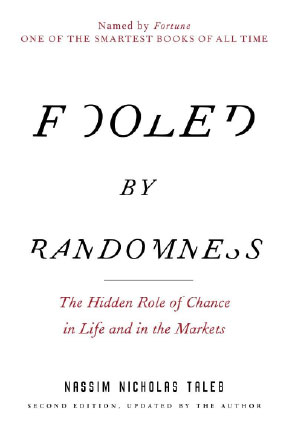
Summary: A thought-provoking exploration of luck, probability, and human perception in financial markets. In *Fooled by Randomness*, Taleb argues that much of what we consider skill in trading or investing can actually be attributed to randomness and chance. He uses engaging stories and analogies to show how people often misinterpret random outcomes as patterns or fail to account for rare events. The book discusses concepts like survivorship bias (we hear about the successful traders, not the many who failed, leading us to overestimate skill) and how humans are wired to find causality even where none exists. Taleb also introduces the idea of "Black Swans" - rare, unpredictable events with massive impact - and warns that traders must always be prepared for the unexpected rather than over-relying on past data. While not a traditional trading manual, *Fooled by Randomness* provides a philosophical framework that sheds light on risk management and our understanding of success.
Why It's Recommended: This book will change the way you think about trading and risk. It's recommended because it instills a healthy skepticism and humility - two traits that can save traders from blowing up. After reading Taleb, you'll be less likely to become overconfident after a winning streak, since you'll recognize the role luck may have played. You'll also start to question strategies that have only thrived in favorable conditions, always asking "what if?" about tail risks that could upend everything. In essence, Taleb's message helps traders create more robust approaches: you realize the importance of hedging against unlikely but possible disasters, and of not conflating short-term success with infallibility. The book's insights into human biases (like seeing patterns in randomness) also help you become more objective in your analysis. It's not a how-to book, but its lessons on probability and psychology are deeply applicable to trading and risk management.
Best Suited For: Traders of all levels, especially those interested in the risk management and philosophical side of trading. If you're an analytical thinker or someone who enjoys big-picture concepts, you'll find it fascinating. For beginners, it sets a solid foundation about expecting the unexpected. For experienced traders, it's a check on ego and a prompt to stress-test your assumptions. It's particularly useful if you've had a run of success and want to ensure you're not simply riding a lucky wave - Taleb's work will encourage you to examine and fortify your strategy for the long haul.
Key Takeaways:
- Skill vs. luck: Understand the thin line between genuine trading skill and random luck. Taleb shows that traders shouldn't take full credit for wins (nor undue blame for losses) without an objective look at whether luck was a significant factor. This perspective keeps you humble and alert to risks.
- Expect the unexpected: Big rare events ("Black Swans") can and will happen. Traders need to always account for the possibility of extreme, unexpected market moves. That means not over-leveraging, diversifying when appropriate, and having contingency plans for market shocks.
- Beware of biases: Humans are prone to seeing patterns where none exist and remembering successes while forgetting failures. *Fooled by Randomness* teaches you to recognize biases like survivorship bias (only seeing the traders who survived) and hindsight bias. By being aware of these cognitive traps, you can become more objective and risk-aware in your trading decisions.