
Technical & Price Action Strategies - Best Books for Charting
*Disclaimer: This page contains affiliate links. If you choose to purchase after clicking a link, we may receive a commission at no extra cost to you.
Technical analysis and price action form the backbone of many successful forex trading strategies. The books in this category will help you read charts, identify patterns, and execute trades based on market movements. From candlestick charting techniques to comprehensive strategy guides, these books are geared toward traders who want to leverage technical indicators and pure price action for an edge in the forex market.
Apply chart concepts (levels, structure, volatility) using these free tools:
- Trend Panel: quick trend read across pairs/timeframes.
- Pivot Calculator: generate pivot levels for the day/week.
- Fibonacci Calculator: map key retracement/extension levels.
- Volatility Tool: align stops/targets with market conditions.
Japanese Candlestick Charting Techniques - by Steve Nison
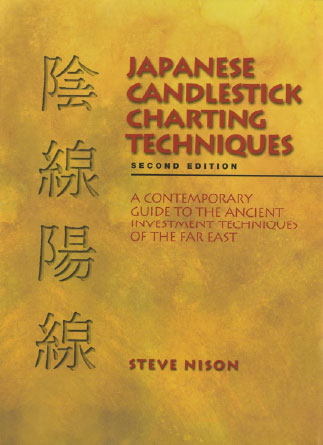
Summary: This is the classic book that introduced candlestick charting to Western traders. Nison provides an in-depth education on candlestick plotting and pattern analysis, distilled from centuries-old Japanese trading techniques and his own practical experience. The book covers everything from candlestick construction and basic patterns to advanced uses of candlesticks in combination with other technical tools. It's packed with hundreds of real-market examples (equities, futures, forex, etc.) to show how candlestick signals can be applied to nearly any market.
Why It's Recommended: Candlestick charts are now a ubiquitous tool - especially among forex traders - and this book is the definitive guide on the subject. Nison's writing is accessible, so even complex patterns are explained in easy-to-understand language with clear visuals. For traders looking to up their technical game, mastering candlesticks can improve timing and spotting of market turning points. Nison's work remains highly relevant and is often referred to as the candlestick "bible" for its comprehensive coverage.
Best Suited For: Intermediate traders who have basic charting knowledge and want to deepen their technical analysis skills. (Beginners can also benefit - the book starts from the basics - but it truly shines as a resource when you're ready to add nuance to your chart reading.) Even experienced traders keep this as a reference guide, since the patterns and concepts have immediate and long-lasting value.
Key Takeaways:
- Candlestick mastery: How to identify and interpret dozens of candlestick patterns (from doji and hammers to complex formations) and what they indicate about market sentiment and potential price reversals.
- Integrating techniques: Ways to combine candlestick signals with other technical analysis methods (like trend lines, oscillators, etc.) for confirmation, improving the reliability of your trading signals.
- Enhanced chart analysis: By learning this approach, traders gain a richer "visual vocabulary" for price action, allowing quicker recognition of bullish or bearish shifts on the charts - an edge whether you trade forex, stocks, or any market.
Forex Patterns and Probabilities - by Ed Ponsi
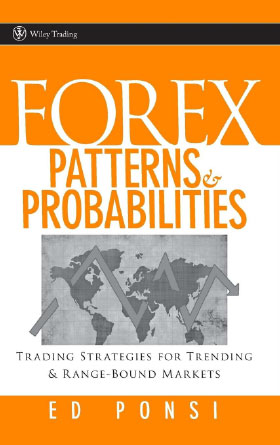
Summary: A comprehensive guide to real-world forex strategies, focused on recognizing and profiting from market patterns. Ed Ponsi, an experienced trader and educator, provides a clear overview of the forex market and dives into specific strategies for both trending and range-bound markets. Unlike many strategy books that stay abstract, this one is very actionable - it covers a wide range of topics including technical and fundamental analysis, risk management, and even trading psychology as they apply to currency trading. Throughout the book, Ponsi shares practical advice and case studies, illustrating how to implement each strategy step by step in real trading situations.
Why It's Recommended: It's a well-rounded playbook that doesn't shy away from specifics. Ponsi's expertise in forex shines through in the way he explains patterns unique to currencies and how to exploit them. Readers will appreciate the concise, no-fluff teaching style - complex concepts are broken down clearly. Because it addresses both trending strategies and range-trading techniques, it prepares you for different market conditions (important in forex, which often alternates between trends and consolidations). In short, this book offers valuable insights for making informed trading decisions in the forex market.
Best Suited For: Beginner to Intermediate traders. It's excellent for beginners as a first foray into strategy (it provides foundational knowledge without assuming prior experience), yet even seasoned traders can pick up new techniques or refinements to their approach. The breadth of topics means there's something for everyone - whether you're just starting or looking to fill gaps in your strategy toolkit.
Key Takeaways:
- Identifying patterns: How to spot and trade common forex market patterns, from momentum-driven trends to range-bound oscillations. You'll learn setups for both breakout trades and mean-reversion trades, tailored specifically to currency pairs.
- All-round strategy elements: A trading strategy is more than entry signals - the book covers incorporating fundamental analysis cues, setting smart stop-losses and profit targets, and managing trades once you're in, as well as controlling risk on each position.
- Practical application: Through real examples and case studies, the book bridges the gap between theory and practice. Readers see exactly how a trade idea is formulated and executed, making it easier to apply the strategies in live trading with confidence.
Naked Forex: High-Probability Techniques for Trading Without Indicators - by Alex Nekritin & Walter Peters
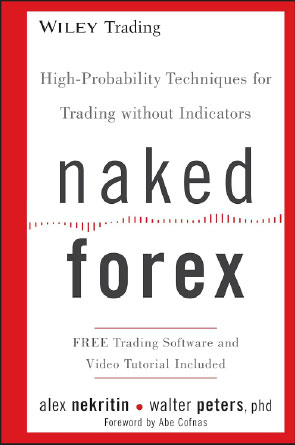
Summary: "Price is king" - that's the core premise of *Naked Forex*. This book teaches you to trade forex using pure price action, entirely stripping away lagging indicators and complicated systems. The authors outline strategies that rely on reading raw price movements and chart patterns (think support/resistance, candlesticks, and price formations) to make trading decisions. In addition to laying out several price-action trading setups, the book helps readers determine what kind of trader they are, so they can align their strategies with their own personality and psychological comfort zone. It's a refreshing take for traders overwhelmed by too many indicators - going "naked" simplifies the process to what truly matters: price.
Why It's Recommended: For anyone feeling lost in a sea of technical indicators, *Naked Forex* is an eye-opener. It proves that effective trading doesn't require a cluttered chart - in fact, simpler can be better. By focusing on price action, traders can often react faster and understand market moves more intuitively. This book is forex-specific, using examples from currency markets to illustrate each concept, which makes it highly relevant. It's also engaging; you get the sense of having a mentor guiding you to see the chart with fresh eyes, rather than relying on "black box" signals.
Best Suited For: Intermediate traders. You'll need a basic understanding of charts and forex terms first. This is ideal for those who have learned the basics (maybe even tried indicator-based systems) and now want to refine their approach by learning pure price action techniques. Beginners can benefit too, but might want to pair it with a more introductory text.
Key Takeaways:
- Price action strategies: How to trade key setups (like pin bars, inside bars, breakout traps, etc.) on naked charts - i.e. trading directly off price patterns without any indicators. This teaches you to trust what price is telling you in the moment.
- Removing noise: By eliminating indicators, you reduce analysis paralysis. The book shows that many indicators are derived from price anyway, so focusing on price itself can often improve clarity and timing.
- Aligning with your psychology: Insights to determine your trading style (trend trader vs. counter-trend, aggressive vs. conservative) and choose price-action methods that fit your personality. This way, your strategy feels comfortable and you can execute it with confidence and discipline.
Technical Analysis of the Financial Markets - by John J. Murphy
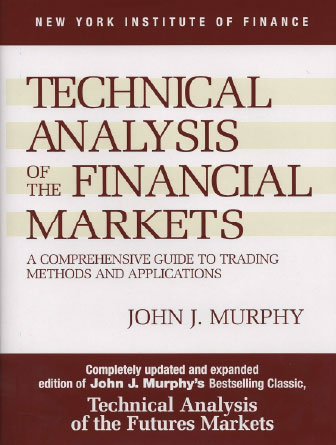
Summary: Often dubbed the "Bible of technical analysis," this book is a comprehensive reference covering the entire landscape of charting and technical indicators. Murphy starts with basic chart construction and types, then progresses through trend analysis, chart patterns, candlesticks, oscillators, moving averages, market cycles - you name it. What sets it apart is the depth and clarity: Murphy not only catalogs each tool, but explains the market psychology driving chart patterns and technical signals. There's also coverage of intermarket analysis, explaining how different asset classes' movements can impact each other - a nice bonus for forex traders seeking context. Whether you need to learn a concept or look up a specific indicator, this book likely has it.
Why It's Recommended: It's simply one of the most authoritative books on technical analysis ever written. The content is timeless - even decades after publication, traders continue to rely on Murphy's explanations. For forex traders, understanding technical analysis is crucial because currency markets are very chart-driven. Murphy's guide provides a strong foundation from which you can build or refine any technical trading system. The writing is accessible without sacrificing nuance, making it useful whether you're learning the basics or reviewing advanced topics.
Best Suited For: Serious technical traders (Intermediate to Advanced). If you're committed to using technical analysis in your trading, this is a must-read reference. Beginners will also find value in its clear introductions to each tool, though the sheer breadth can be overwhelming as a first read (it's fine to treat it as a textbook and digest it gradually).
Key Takeaways:
- Full-spectrum technical knowledge: Master core concepts like how to identify trends and chart patterns, interpret volume and momentum indicators, and use tools like Fibonacci retracements or oscillators properly. Murphy builds you up from ground level to advanced techniques in a logical way.
- Market psychology and confirmation: Rather than just memorizing patterns, you learn why patterns like head-and-shoulders or triangles work - understanding that they reflect crowd psychology. You also learn the importance of confirming signals (e.g. via volume or multiple indicators) rather than relying on any one signal in isolation.
- Intermarket insights: Murphy's chapters on intermarket analysis are a gold mine for forex traders. You gain insight into how bonds, equities, and commodities influence currency movements, helping you go beyond charts to grasp the bigger picture behind technical signals. This contextual understanding can significantly improve your technical trading decisions.