
Trading Psychology - Best Books for Mental Discipline
*Disclaimer: This page contains affiliate links. If you choose to purchase after clicking a link, we may receive a commission at no extra cost to you.
Successful trading is as much about mindset and discipline as it is about strategy. The books in this section focus on the psychological aspects of trading: controlling emotions, developing mental resilience, and cultivating the winning habits and attitudes of top traders. Whether you need to overcome fear and greed or build confidence and consistency, these reads will help strengthen your mental game.
Reduce decision stress by standardizing the "pre-trade" work with these tools:
- Position Size Calculator: remove guesswork from sizing.
- Market Hours: trade when liquidity (and focus) is highest.
- Compounding Calculator: set expectations and stay patient.
- Trend Panel: follow a simple, repeatable market plan.
Trading in the Zone - by Mark Douglas
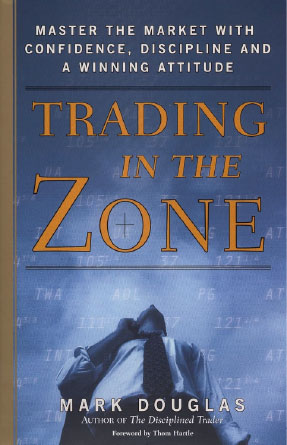
Summary: A seminal work on developing the mental discipline and consistency required for successful trading. Mark Douglas delves into the psychological barriers that cause traders to sabotage themselves - things like fear, greed, lack of confidence, and disbelief in their strategy. The book teaches that maximizing your "trader's state of mind" is the key to achieving consistent results. Douglas addresses the conflicts and contradictions in thinking that plague traders (for example, wanting to avoid loss at all costs, which leads to cutting winners early or letting losers run). He emphasizes adopting a probabilistic mindset - learning to think in terms of odds and accept the uncertainty of each individual trade. Through practical examples and exercises, *Trading in the Zone* guides readers to build unshakable confidence in their system and the discipline to follow it.
Why It's Recommended: This book is often cited by traders of all levels as a game-changer because it tackles the "people factor" of trading - the fact that our own minds are often our biggest obstacle. Unlike generic self-help, Douglas's insights come directly from the trading battlefield. He identifies why otherwise skilled traders fail: often it's not lack of knowledge, but mental mistakes. The book offers specific solutions (not just theory) to overcome these pitfalls, making it a practical manual for shaping a winning mindset. Even if you have the best strategy in the world, it won't yield results if you can't execute it with consistency - *Trading in the Zone* shows you how to do exactly that by getting your psychology right.
Best Suited For: All traders - beginner to advanced. If you're new, it's great to instill good habits from the start; if you're experienced, it will help identify and fix the mental errors that have been holding you back. In essence, anyone who trades can benefit from the introspection and techniques in this book. (In fact, many say you should reread it periodically as your trading evolves.)
Key Takeaways:
- Think in probabilities: Successful trading is about thinking in terms of odds, not certainties. Douglas trains you to truly accept the risk of each trade so that any individual loss doesn't unhinge you - allowing you to execute your edge over a series of trades without second-guessing.
- Eliminate emotional biases: Identify the common psychological pitfalls (fear of being wrong, revenge trading after a loss, overconfidence after a win, etc.) and learn techniques to avoid them. The book helps you replace these destructive habits with routines that enforce discipline and objectivity.
- Build a winner's mindset: Through insights and exercises, learn to align your mindset with market realities - for example, understanding that the market can do anything and you must trade without expectations. By adopting the beliefs and attitudes of a consistently successful trader, you gain the confidence to stick to your plan and the discipline to let probabilities play out without letting emotions derail you.
Trading Psychology 2.0 - by Brett N. Steenbarger
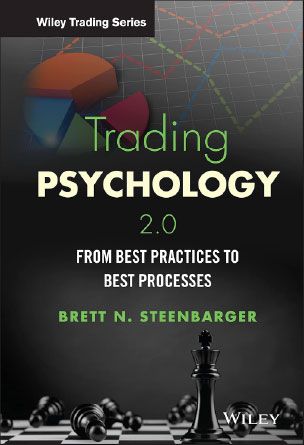
Summary: Written by a renowned trading coach and psychologist, this book is a comprehensive guide to applying modern psychology to trading performance. Steenbarger builds on both academic research and decades of coaching experience to offer critical advice and proven techniques for improving traders' mindset and consistency. The content is very actionable: it presents insights on topics like adapting to changing market conditions, building on your personal strengths, and developing solid processes and routines to continually improve your trading.
Why It's Recommended: Brett Steenbarger is a leading authority in trading psychology, and this book encapsulates his wisdom in one place. It stands out for its blend of scientific insight and practical techniques. Rather than abstract theory, it gives you concrete ideas to implement - from psychological exercises to performance metrics - all aimed at making you a more self-aware and adaptable trader.
Best Suited For: Intermediate to Advanced traders. Those who have been trading for a while will likely get "aha" moments from diagnosing issues they've faced and finding new techniques to push through plateaus. (Keen beginners can still benefit - it will set you on the right path early - but some concepts are easier to appreciate with trading experience.) It's especially useful for traders who approach trading seriously (like a business) and want to optimize their daily routines, mental states, and continuous improvement process.
Key Takeaways:
- Process over outcome: Develop robust trading processes and routines that lead to success. By focusing on best practices - such as regularly reviewing your trades, adapting strategies to market changes, and continuously building your skills - you create a self-improvement loop rather than fixating on individual wins or losses.
- Psychological techniques: Learn a range of techniques to manage and harness your psychology - from mindfulness exercises that improve focus, to visualization and positive habit formation, to biofeedback methods for controlling stress. These tools help you maintain emotional equilibrium and perform at your peak even under market pressure.
Best Loser Wins - by Tom Hougaard
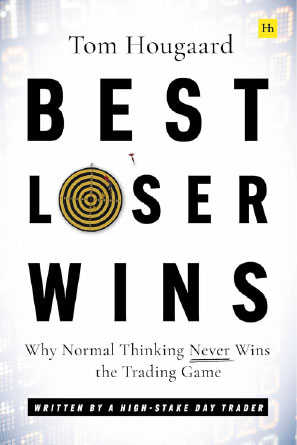
Summary: A refreshingly unconventional take on trading psychology that argues the key to winning is learning how to lose. Tom Hougaard, a veteran trader, flips the script by focusing on how embracing and managing losses can build the mental resilience needed for long-term success. The book is filled with Hougaard's personal experiences and hard-won lessons. He explains how most traders fear losses so much that it cripples their decision-making, and shows how to reframe losses as learning opportunities rather than failures. By training yourself to handle the pain of losing (hence the idea that the "best loser wins"), you develop extreme discipline and toughness. The material also covers techniques for staying calm under pressure and maintaining focus during drawdowns.
Why It's Recommended: Many trading psychology books talk about discipline and controlling emotions, but *Best Loser Wins* hits a very specific nerve - the emotional toll of losses, which every trader inevitably faces. Hougaard's perspective is both brutally honest and motivational. He doesn't sugarcoat the challenges; instead, he provides a roadmap for turning psychological struggles into strengths. His ideas resonate because they come from real-world trading "battle scars." This book will change how you view drawdowns and mistakes - instead of something to dread, they become stepping stones to mastery once you learn the lessons they offer. For anyone who has ever felt demoralized by a string of losing trades, Hougaard's approach can be a game-changer in developing true grit and perseverance.
Best Suited For: Traders struggling with the emotional impact of losses. If you find yourself breaking rules after a big loss, or losing confidence due to setbacks, this book is aimed directly at you. It's applicable to all experience levels, but especially intermediate traders who have tasted the ups and downs of trading and realize psychology is now their main hurdle. Even advanced traders can benefit from the mindset shifts here to further toughen their mental game.
Key Takeaways:
- Embrace and learn from losses: Instead of fearing losses, approach them as feedback. Each loss is telling you something (about your strategy, market conditions, or your mindset). Hougaard teaches that by honestly examining and accepting your losses, you can extract lessons that make you a stronger trader next time.
- Build mental toughness: Strategies to cultivate extreme self-discipline and resilience. This includes techniques to remain unfazed by a losing trade - maintaining focus and confidence so you continue to execute your strategy without hesitation or frustration. By becoming what Hougaard calls the "best loser," you paradoxically set yourself up to win in the long run.
- Detachment from outcomes: The book reinforces that to thrive, you must love the game more than the money. When you internalize that losses are part of the game, you stop taking them personally. This detachment allows you to follow your trading plan consistently, making rational decisions under pressure where others might panic. In essence, those who manage losses the best end up winners, because they stay in the game and keep improving while others quit or blow up. Hougaard's own journey exemplifies this principle and serves as inspiration.
The Hour Between Dog and Wolf - by John Coates
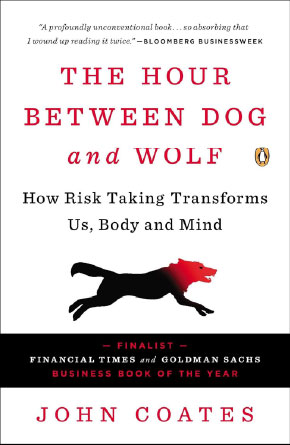
Summary: A fascinating dive into the biological and physiological side of trading psychology. John Coates, a former trader turned neuroscientist, explores how our body's chemistry can dramatically affect our risk-taking and decision-making in the markets. The title refers to those moments of intense uncertainty (the "hour between dog and wolf") when a trader's state can shift from calm to high-adrenaline. Coates explains how hormones like adrenaline and cortisol spike under trading stress and excitement, and how these biochemical changes can lead traders to take irrational risks or freeze up at critical moments. The book is rich with scientific studies and real trading floor anecdotes, illustrating that trading is as much a physical endeavor as a mental one. It sheds light on phenomena like the rush of a winning streak (and the dangerous overconfidence it can breed) or the debilitating effect of sustained stress from losses.
Why It's Recommended: This book provides a totally unique perspective on trading psychology by linking mind and body. Many traders will recognize the feelings Coates describes - the racing heart, the jitters, the "gut feelings" - but this is the first time they'll truly understand what's happening inside them during those moments. By revealing the biology behind emotions like overconfidence or fear-based hesitation, Coates arms traders with self-awareness that can help them manage those states. It's also an eye-opener in showing that improving your trading psychology isn't just mental - it may involve managing your physical state as well.
Best Suited For: Intermediate to Advanced traders, especially those interested in the science of decision-making. If you're the kind of trader who's already working on psychology and looking for an extra edge, the insights here are invaluable. Beginners might find the scientific parts a bit dense, but the storytelling keeps it engaging. It's particularly useful for high-frequency or professional traders who deal with intense stress regularly - understanding the bodily effects can help in developing techniques (like breathing exercises, breaks, fitness routines) to maintain a balanced state.
Key Takeaways:
- Biology impacts performance: Recognize that your body's hormonal responses (surges of adrenaline during excitement, dopamine after wins, and cortisol during fear or uncertainty) directly impact your trading decisions. This awareness is the first step to controlling their influence.
- Avoid the overconfidence trap: Coates shows that a series of wins can chemically produce euphoria and overconfidence, which may lead to taking outsized risks. Knowing this, traders can institute rules (like position size limits or mandatory breaks after big wins) to counteract the physiological pull toward riskier behavior. In short, when you feel "invincible," that's exactly when to be cautious.
- Manage stress for longevity: Chronic stress from trading can erode decision-making (through cortisol's effects, for example). The book underlines the importance of stress management techniques - such as taking time off after heavy trading periods, physical exercise, and other habits to reset your chemistry. By managing your physiological state, you maintain sharper judgment and avoid burnout, helping ensure long-term trading success.